Foundation in Casablanca
Anas Sefrioui establishes Douja Promotion Groupe Addoha, specialising from the outset in economic and social housing — described in the company’s own materials as its historic business.
The company
Douja Promotion Groupe Addoha S.A. — founded by Anas Sefrioui in Casablanca in 1988, listed on the Casablanca Stock Exchange since 2006, and the vehicle through which almost every development decision of his career has been executed.
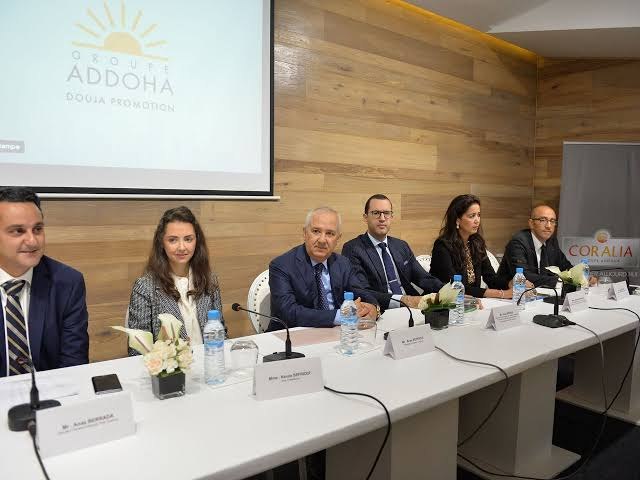
A Groupe Addoha press conference. The company’s brand architecture — Addoha, Coralia, Excelia and Prestigia — spans the full range of the Moroccan residential market.
Corporate details from the company’s own investor materials, the Casablanca Stock Exchange listing and Forbes reporting. See Sources & References.
Company history
The company’s own published history marks nine turning points. Each is dated, and each is verifiable against corporate disclosure or contemporaneous reporting.
Anas Sefrioui establishes Douja Promotion Groupe Addoha, specialising from the outset in economic and social housing — described in the company’s own materials as its historic business.
Delivery of 2,371 housing units at Aïn Sebaâ in Casablanca establishes the operating template: standardised typologies, industrial volume, and a sales process designed around first-time buyers.
An initial agreement with the Moroccan state covering a minimum of 3,500 units. The convention model — capped prices in exchange for fiscal incentives — becomes the backbone of the group’s order book for the next two decades.
Thirty-five per cent of capital placed in July at MAD 585 per share. The offering is followed by an extraordinary run in the share price — reported as a roughly sixfold rise within six months before a severe reversal.
In December the group acquires 50% of Fadesa Maroc for MAD 1.3 billion, gaining the Mediterrania Saidia coastal development of more than 700 hectares together with the Citaf and Optim Immobilier subsidiaries. In the same period Sefrioui founds Ciments de l’Atlas, with plants at Settat and Beni Mellal.
A dedicated high-end brand for Casablanca, Rabat, Marrakech and Fez, and for coastal destinations including Tangier–Tétouan and Saidia. Social housing’s share of revenue falls from 79% in 2010 to 70% in 2011 as the premium segment rises from 21% to 30%.
Created to support apprenticeship and vocational training for young people entering the construction trades.
The mid-range brand launches, and the group signs conventions with the state of Côte d’Ivoire — exporting the Moroccan policy-partnership model to a second country.
A strategic plan that subordinates growth to cash generation, receivables collection and debt reduction — the pivot that defines the following four years.
Business model
Addoha addresses the Moroccan residential market across its full income range, using distinct brands so that a social-housing reputation does not constrain premium pricing — or vice versa.
The group’s founding business and, for most of its history, the majority of its volume. Capped-price apartments delivered under state conventions, sold largely to first-time buyers, with financing and registration handled through the group’s own single-window sales network.
Apartments, villas and serviced land plots for buyers above the social-housing threshold. Coralia launched in 2015; Excelia originated within the Fadesa Maroc business. This is the segment most directly favoured by Morocco’s 2024–2028 direct housing aid, the bulk of whose applications fall in the MAD 300,000–700,000 band.
High-end residential development on prime sites with integrated amenities, in the principal cities of the kingdom and at flagship coastal destinations. Prestigia extended to Côte d’Ivoire in 2019 and now anchors the group’s premium pipeline, reported at around MAD 12 billion of potential revenue.
Not part of the listed developer, but inseparable from the founder’s strategy. Ciments de l’Atlas produces cement in Morocco from plants at Settat and Beni Mellal; Ciments de l’Afrique operates across eleven African countries. Owning the principal input to mass housing converts a volatile cost line into an owned asset.
Market presence
Morocco remains the core. Sub-Saharan Africa has been the growth engine since 2012 and now accounts for a substantial share of both production and secured revenue.
The group reports more than 148 completed projects across 19 cities, totalling 257,517 units. Prestigia’s high-end activity concentrates on Casablanca, Rabat, Marrakech and Fez, together with the Tangier–Tétouan corridor and Saidia. The Mediterrania Saidia holding on the Mediterranean coast, acquired through Fadesa Maroc in 2007, runs to more than 700 hectares.
The group has also secured contracts for more than 5,000 rehousing units in Casablanca, Rabat and Marrakech — work associated with slum-clearance and urban-renewal programmes — expected to generate approximately MAD 1.2 billion of revenue.
Development activity began in Senegal in 2012 and now spans Côte d’Ivoire, Senegal, Guinea, Gabon and Cameroon, with Prestigia present in Côte d’Ivoire since 2019. Roughly 30% of the group’s 26,000-plus units in production at end-2025 were in West Africa, and about 28% of secured revenue is African.
In March 2025 the International Finance Corporation announced a partnership with Addoha Côte d’Ivoire, reported as USD 27 million of financing supporting some 5,600 affordable homes in Abidjan. In February 2026 the group announced a premium mixed-use complex in Abidjan’s Zone 4 valued at more than MAD 3 billion. Addoha has also been named among five operators selected for Ghana’s social housing programme.
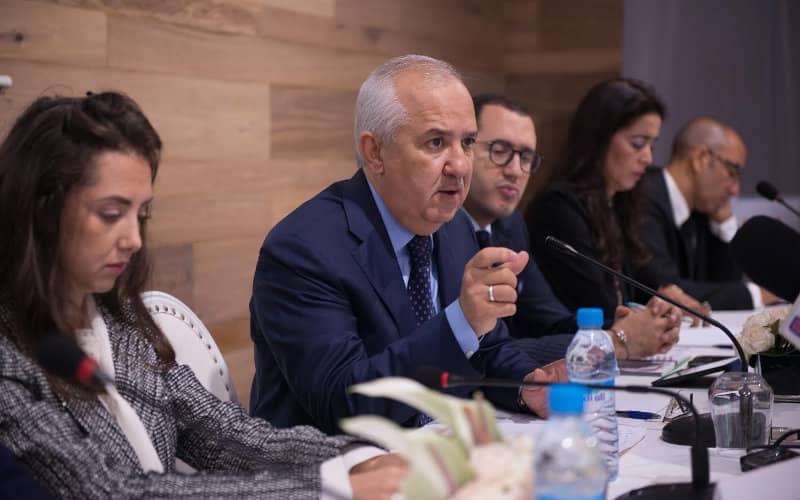
Financial record
Comparing 2021 with 2025 shows the restructuring in a single view. The two sets are drawn from published accounts and results reporting respectively.
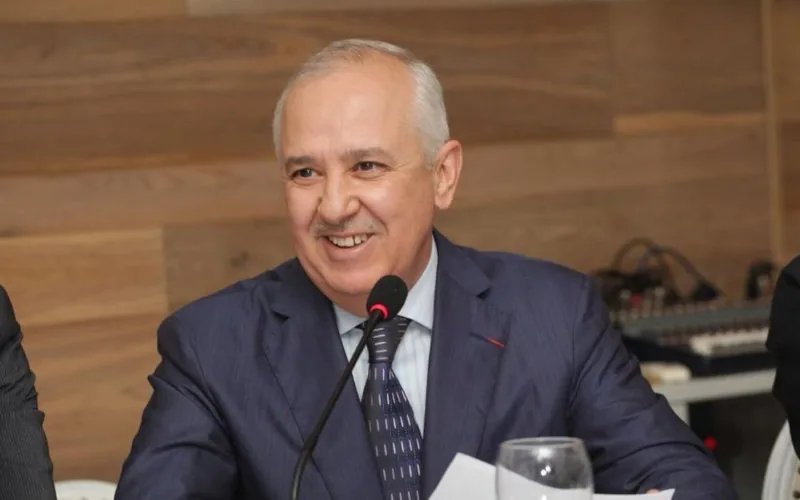
Revenue rose 4% in 2025 and net profit 70%. The company noted that under Morocco’s previous real-estate accounting standards the same year’s revenue would have been reported at MAD 3.5 billion; new rules effective January 2025 changed the timing of revenue recognition. Both figures are given here because comparing 2025 with earlier years using only the new basis understates the change.
Secured revenue — contracted business not yet recognised in the income statement — rose 22% to MAD 11.2 billion, of which roughly 28% is African. At year-end more than 26,000 units were under construction across projects worth close to MAD 21 billion, about 30% of them in West Africa.
Figures on this page are reproduced from company disclosure and business-press coverage of published results, with the relevant year stated in every case. They are historical records, not forecasts, and nothing here should be read as investment advice or as a projection of future performance.
Continue
The founder, the strategy and the industry context around the company.