Anas Sefrioui

Leadership

Business leadership

Founder-led, family-controlled, vertically integrated and unusually willing to reverse its own strategy. An analysis of how Anas Sefrioui exercises leadership — built from documented decisions, not from attributed statements.

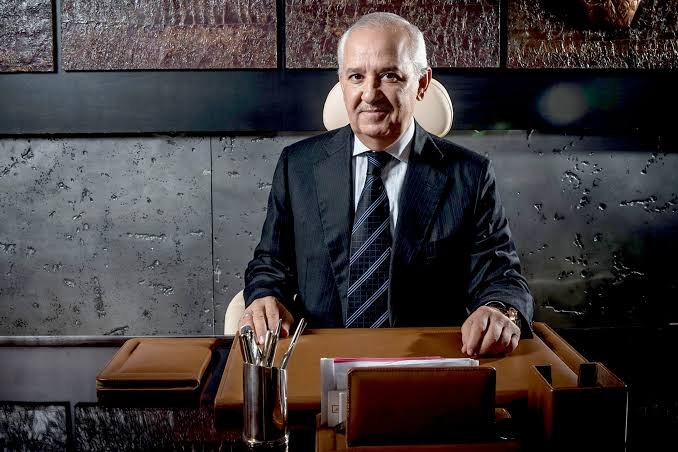
Anas Sefrioui at his executive desk, chairman of Groupe Addoha

Anas Sefrioui has held the chair of the company he founded for more than thirty-five years, through a flotation, a speculative bubble in his own stock, an over-extended expansion and a multi-year restructuring. Continuity of that length is itself a fact about how the business is led.

Ownership & roles: verified Interpretation: editorial

Structure

Control as an operating choice

Most founders dilute steadily after listing. Sefrioui did the opposite — and the consequences run through every strategic decision the group has taken since.

Addoha floated 35% of its capital in 2006. Two decades later the founding family is reported to hold approximately 64.8% — some 260.7 million shares. For a listed developer of this size, in any market, that is a high degree of concentration.

Concentration of that kind has costs and benefits, and both are visible in the record.

What it enables

It allows the company to take decisions whose payback period is longer than a market cycle. The move into cement, the sustained build-out across eleven African countries, and above all the 2018 decision to stop growing in order to repair the balance sheet — each required tolerating several years of unattractive reported numbers. A widely held company under activist pressure would have found that sequence considerably harder to sustain.

What it concentrates

It also means that the founder’s personal fortune is, in practice, a leveraged position in a single listed security. Reporting in 2025 recorded his estimated wealth falling by roughly USD 300 million after Addoha shares dropped more than 30%. The upside of control is that you keep the gains; the symmetry is that you keep the drawdowns too.

What it requires

Concentrated ownership places a correspondingly heavy weight on governance. Addoha’s board has included independent directors from outside Morocco, and the company reports to the Casablanca market under listed-company disclosure obligations. Both are structural counterweights to founder control rather than substitutes for it.
Method

Five patterns that repeat across four decades

Derived by looking at what the group actually did at each decision point, rather than at how it described itself.

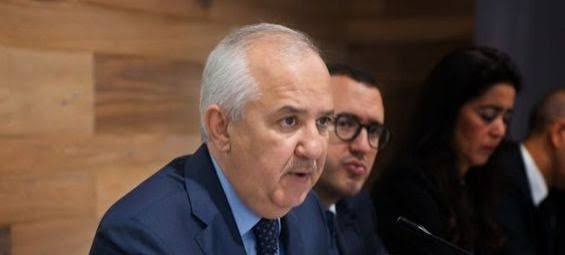
Anas Sefrioui speaking at a leadership panel with Groupe Addoha colleagues
Anas Sefrioui at a company panel. Groupe Addoha’s senior team has been the vehicle for a strategy set and controlled by its founder for more than three decades.

Enter where the competition has already left

Affordable housing in 1988 was not a contested segment; it was an abandoned one. The same instinct is visible in the choice to build cement plants in Guinea, Chad and Guinea-Bissau — markets too small or too difficult to attract the global majors, and therefore markets where an operator with a working model faces limited competition.

Solve the customer’s problem, not the product’s

The single-window sales model — banks, notaries and administration inside the developer’s own premises — did nothing to improve the apartments. It improved the buyer’s ability to complete a purchase, which turned out to be the binding constraint on the whole market.

Own the input before it owns you

Cement is the dominant variable cost in mass housing. CIMAT and CIMAF converted that exposure into an asset — and produced a second business whose earnings do not depend on the Moroccan residential cycle. Development finance institutions subsequently backed it: in 2021 the IFC, Proparco and the Emerging Africa Infrastructure Fund arranged a €161.25 million package for CIMAF’s West African capacity.

Move the model rather than abandon it

When Moroccan social housing matured, the group did not reinvent itself. It relocated the same capability to markets at an earlier point in the same demographic curve — Côte d’Ivoire, Senegal, Guinea, Gabon, Cameroon — and stacked new products on top of it at home.

Accept an unpopular period

“Priorité au Cash 2020” produced a loss-making year and a reduced workforce before it produced a repaired balance sheet. The willingness to publish several years of that, rather than to engineer around it, is the single hardest thing in the record to do.

Succession

The question every founder-led group eventually faces

Concentrated ownership makes a company decisive in the present and fragile in the future, unless succession is built into the structure early.

Anas Sefrioui was 69 in 2026, and has led the group he founded for its entire existence. In closely held companies, that combination — long tenure, concentrated ownership, personal authority — is precisely what creates key-person risk.

The documented response is the position held by Kenza Sefrioui, his daughter, as deputy chair of Groupe Addoha, a role recorded by Forbes in its profile of the family. Placing the next generation inside the governance of the company — rather than in an operating role adjacent to it — is a structural rather than symbolic answer to the succession question.

The group has also brought outside experience onto its board. Published accounts of its governance have listed independent directors drawn from senior international business and diplomatic careers, an unusual composition for a Moroccan family-controlled developer and one that suggests a deliberate widening of counsel.

Beyond that, the record does not support further claims. No succession plan has been published, no timetable announced, and no statement of intent made by the founder that can be verified. This site records what is documented and stops there.

Not stated as fact

Nothing on this page should be read as a description of Groupe Addoha’s internal succession planning, which has not been publicly disclosed.

Continue

Related reading

Strategy, industry context and the dated record.