Anas Sefrioui

Entrepreneurship

The entrepreneurial journey

Five phases, 1988 to the present: founding against the grain, industrialising a segment nobody wanted, listing, over-extending, repairing, and re-entering growth on different terms.

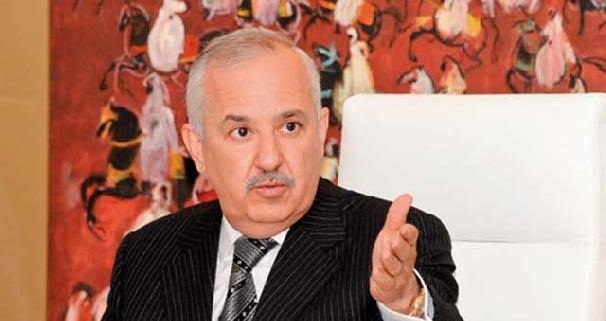
Anas Sefrioui at a Groupe Addoha press briefing in Morocco

A founder’s journey is usually told as a sequence of wins. This one is more interesting told as a sequence of constraints — because at each stage the constraint changed, and the response to it defines the phase.

  • Phase I · 1988–1999Proving the model
  • Phase II · 2000–2006Policy & public capital
  • Phase III · 2007–2015Widening the group
  • Phase IV · 2016–2022Cash & consolidation
  • Phase V · 2023–Value-led growth

1988 – 1999 · Proving the model

The constraint was credibility

A new developer with no track record, targeting buyers the banks were not lending to, in a segment established firms considered unprofitable.

When Douja Promotion Groupe Addoha was founded in Casablanca in 1988, the affordable end of the Moroccan housing market was not an opportunity that established developers were competing for. It was the part of the market they had decided to leave alone. Margins per unit were slender, buyers were difficult to finance, land in the right locations was awkward, and the administrative burden of registering hundreds of small transactions was considerable.

Sefrioui’s wager was that all four of those obstacles were fixable with scale and process, and that the underlying demand was the most reliable in the country. He was right about the demand. Proving it took the better part of a decade.

The Aïn Sebaâ programme

The group’s first programme at real scale delivered 2,371 housing units at Aïn Sebaâ, an industrial district of eastern Casablanca. Reporting on this period notes that the company built government-supported income-geared housing during the reign of King Hassan II. The significance of the programme is not its size in isolation — it is that it established, in a single project, that the whole model worked: standardised units, compressed build cycles, and a sales operation capable of converting modest-income interest into completed purchases.

Selling to a first-time buyer

The commercial innovation of this period was the single-window sales model. Addoha brought bank branches, notaries and administrative services into its own premises, so that a buyer could arrange finance, execute the deed and complete registration in one place. For a household without prior banking experience, the removal of that friction was not a convenience — it was the difference between an aspiration and a transaction.

It is a distribution idea rather than a construction one, and it is the clearest trace of Sefrioui’s background in a bulk consumer trade. It is also the part of the model that competitors found hardest to copy quickly, because it required the developer to build relationships with banks and public administration rather than simply to build better.

2000 – 2006 · Policy & public capital

The constraint was capital

A working model with more demand in front of it than the balance sheet could fund.

In 2000 Addoha signed an initial convention with the Moroccan state covering a minimum of 3,500 units. The convention mechanism is central to understanding everything that follows. Under it, a developer commits to deliver a defined volume of housing at a capped selling price, and receives fiscal relief in return. It converts a public objective into a private order book — and it rewards firms that can execute at industrial volume rather than firms that build well in small quantities.

Volume commitments of that kind consume working capital long before they generate cash. Land must be acquired, infrastructure laid and units built well ahead of completion payments. By the middle of the decade the binding constraint on the business was no longer whether the model worked; it was how much of it could be financed at once.

The answer was the public market. In July 2006 Sefrioui floated 35% of Addoha’s capital on the Casablanca Stock Exchange at MAD 585 per share. The listing supplied permanent capital for land acquisition precisely as Morocco’s housing programmes were accelerating.

What happened next entered Moroccan market history. The share price is reported to have multiplied roughly sixfold within six months before collapsing, and the period drew allegations of insider trading. Whatever the merits of those allegations, the episode had a durable effect: it fixed Addoha in the public mind as a stock as much as a builder, and it tied the founder’s recorded wealth to a price that would prove highly volatile.

2007 – 2015 · Widening the group

The constraint was concentration

One product, one country, one policy framework. The decade after listing was spent reducing all three dependencies at once.

2007

Upstream, into cement

Ciments de l’Atlas (CIMAT) was founded, with plants at Settat and Beni Mellal reported at 1.6 million tonnes of capacity each. In a business where cement is the dominant input cost, owning the supply removes a price risk that no amount of construction efficiency can offset.

2007

Upmarket, and onto the coast

In December the group paid MAD 1.3 billion for 50% of Fadesa Maroc, taking control of the Mediterrania Saidia development — more than 700 hectares on the Mediterranean — along with the Citaf and Optim Immobilier subsidiaries. Reporting at the time indicated Addoha held pre-emption rights over the remaining half.

2009

Prestigia

A dedicated luxury brand, developing high-end residential property in Casablanca, Rabat, Marrakech and Fez, and at coastal destinations including Tangier–Tétouan and Saidia. The premium share of group revenue rose from 21% in 2010 to 30% in 2011 as social housing fell from 79% to 70%.

2011

The Addoha Foundation

Established to support apprenticeship and vocational training for young people — a response to the construction sector’s chronic shortage of trained trades, and one of the few documented non-commercial initiatives associated with the group.

2012

Across the Sahara

Development activity extended into francophone West and Central Africa, beginning in Senegal. CIMAF built cement capacity alongside it, eventually operating in eleven countries — Côte d’Ivoire, Guinea, Cameroon, Burkina Faso, Gabon, Congo, Mali, Mauritania, Ghana, Chad and Guinea-Bissau. Early plants outside Morocco were reported at around 500,000 tonnes of capacity each.

2015

Coralia, and Côte d’Ivoire

The mid-range brand launched, completing a three-tier product architecture from social housing to luxury. In the same year the group signed conventions with the Ivorian state, extending the Moroccan policy-partnership model into a second country.

2016 – 2022 · Cash & consolidation

The constraint was the balance sheet

The least celebrated phase of the journey, and arguably the most demanding: dismantling the growth machine without dismantling the company.

By the mid-2010s the arithmetic that had powered two decades of expansion had begun to work in reverse. The national social-housing programme running from 2010 to 2020 had contracted roughly 2.1 million units; published figures put units actually sold at 716,331, an average of about 47,000 a year. The gap between contracted supply and absorbed demand left the entire sector holding inventory, receivables and land that had been acquired on the assumption of faster turnover.

In 2018 Addoha launched “Priorité au Cash 2020”. The name is unusually literal: the plan subordinated growth to cash generation, prioritising collection of receivables, disposal of non-core assets and reduction of debt. For a founder whose entire reputation rested on building more than anyone else, it required publicly reversing the strategy that had made him.

The 2021 accounts show what that cost. Revenue of MAD 1.2 billion. A net loss of MAD 96 million. Equity of MAD 9.6 billion against MAD 4.7 billion of debt, and a workforce reduced to 481. These are the numbers of a company deliberately shrinking its activity to repair its structure.

Two things kept the strategy viable. The first was the cement business, whose economics are independent of the Moroccan residential cycle. The second was that the family retained around 64% of the equity, which meant the decision to trade several years of growth for solvency did not have to survive a proxy fight.

Analytical note

The interpretation above — that concentrated ownership made a long, unpopular restructuring easier to sustain — is editorial analysis, not a claim sourced to the company. The financial figures themselves are drawn from published accounts and press reporting.

2023 – present · Value-led growth

The constraint became the model itself

Volume housing had reached the limits of what Moroccan policy and Moroccan demand would support. The response was to change the product and the geography together.

Morocco changed the rules in 2024. Instead of subsidising developers through fiscal relief, the state began paying buyers directly: MAD 100,000 toward a home priced up to MAD 300,000 and MAD 70,000 for one between MAD 300,000 and MAD 700,000, under a programme running to 2028. Reported uptake has passed 105,000 beneficiaries, with about 62% of applications in the upper price band.

That upper-band concentration is the commercially important detail. Demand-side aid lifts what a household can afford, which shifts the viable product upward — toward the mid-market that Coralia was created for, and away from the very lowest price points on which the original model depended.

Addoha’s reported strategy has moved in the same direction: away from high-volume, thin-margin affordable housing and toward selective development prioritising quality, execution speed and return on capital. The group has secured contracts for more than 5,000 rehousing units across Casablanca, Rabat and Marrakech, expected to generate roughly MAD 1.2 billion, and reports a premium pipeline representing around MAD 12 billion of potential revenue.

The clearest single signal came in February 2026, when the group committed more than MAD 3 billion — about USD 300 million — to a mixed-use complex in Abidjan’s Zone 4. Anchored by four twenty-storey residential towers under the name Les Tours Éléphants, with offices and a shopping centre across more than 150,000 square metres of usable floor space, it is a premium project in a foreign market, financed by a group that spent its first thirty years building capped-price apartments at home.

Continue

Related reading

The company, the industry and the dated record behind this narrative.