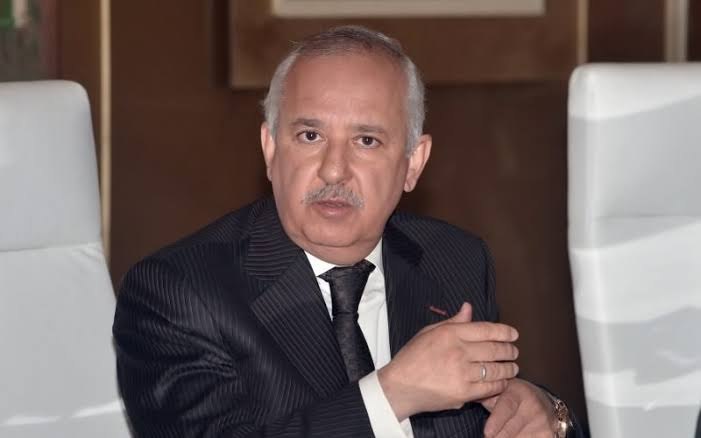
Anas Sefrioui

Biography

About Anas Sefrioui

Born in Fez in 1957. Founder, in 1988, of the company that became Morocco’s largest listed homebuilder. Builder of a cement group operating across eleven African countries. A career assembled almost entirely out of one idea, executed for nearly four decades.

Anas Sefrioui photographed standing in an office interior in Casablanca

Anas Sefrioui, founder and chairman of Douja Promotion Groupe Addoha.

  • Full nameAnas Sefrioui
  • Date of birth16 May 1957
  • Place of birthFez, Morocco
  • NationalityMoroccan
  • ResidenceCasablanca
  • Principal roleFounder & chairman, Groupe Addoha
  • Also foundedCIMAT · CIMAF
  • FamilyMarried, three children
  • Source of wealthReal estate · self-made

Biographical details as recorded by Wikipedia and the Forbes profile of Anas Sefrioui. “Self-made” is Forbes’ own classification of the source of wealth. Full attributions on the sources page.

Origins

Fez, and a business measured in kilogrammes

The formative years are not documented in the detail that later corporate history is. What is verified is where he came from, and what he did before property.

Anas Sefrioui was born on 16 May 1957 in Fez, the oldest of Morocco’s imperial cities and, for centuries, its commercial and intellectual capital. His father was Haj Abdeslam Sefrioui. Rather than complete secondary school, the young Sefrioui went to work in the family business: the production and sale of ghassoul, the mineral clay quarried in the Middle Atlas and used across Morocco as a traditional cleanser for hair and skin.

It is worth pausing on what that business actually is, because it explains more about the later career than any conventional c.v. would. Ghassoul is a bulk commodity. It is extracted, dried, graded, packed and sold in volume at a low unit price to a mass domestic market. There is no brand premium to hide behind and no way to make a poor cost structure profitable. Success depends on procurement, logistics, working-capital discipline and distribution reach — on being able to move a great deal of an inexpensive thing, reliably.

Those are, precisely, the competences that mass housing demands. When Sefrioui entered property development three decades later, he did not arrive with an architect’s sensibility or a financier’s. He arrived with a merchant’s, and he applied it to a product that most of his competitors treated as a craft.

On the limits of the record

Detailed accounts of Anas Sefrioui’s schooling, early employment and the years between the family business and 1988 are not available in reliable published sources. This site does not fill that gap with invention. Where the record is thin, it is described as thin. See Early Life & Background for the full treatment of this period.

1988 — 2005

Founding a company against the prevailing logic

Addoha was built on a segment that other developers avoided, and on an operating model borrowed from manufacturing rather than from property.

In 1988 Sefrioui founded Douja Promotion Groupe Addoha in Casablanca. Morocco was in the middle of a demographic and geographic transformation: the rural population was moving to the cities faster than formal construction could accommodate, and the shortfall was being absorbed by informal settlements on the urban periphery.

The commercial orthodoxy of the time was to build for buyers who already had money. Sefrioui built for buyers who did not. The economics only work if three things are true at once: the per-unit cost is driven down by standardisation, the build cycle is short enough that capital turns over quickly, and the buyer can actually complete a purchase.

The third condition was the one the industry consistently underestimated. A household earning a modest income might be able to afford a capped-price apartment and still be unable to buy one, because the mortgage, the notarial deed and the registration were unfamiliar, intimidating and geographically scattered. Addoha’s answer — putting bank branches, notaries and administrative services inside its own sales offices — converted latent demand into transactions. It is a distribution solution, not a construction one, and it is the clearest fingerprint of the founder’s trading background.

The group’s first programme at real scale delivered 2,371 units at Aïn Sebaâ in Casablanca. In 2000 it signed an initial convention with the Moroccan state covering a minimum of 3,500 units — the beginning of a long alignment between the company’s order book and national housing policy.

2006 — 2015

Public capital, and the widening of the group

Listing changed the company’s cost of capital, its visibility and its obligations — and was followed by the most expansive decade in its history.

July 2006 — the Casablanca listing

Sefrioui placed 35% of the capital at MAD 585 per share. The flotation gave Addoha permanent capital for land acquisition at exactly the moment Morocco’s housing programmes were accelerating. It also made a family-controlled business subject to public disclosure, analyst scrutiny and daily pricing.

What followed became part of Moroccan market folklore: the share price is reported to have risen roughly sixfold within six months before falling back very sharply. The episode is a reminder that the group’s equity story and its operating story have not always moved together.

December 2007 — Fadesa Maroc and the coastline

Addoha paid MAD 1.3 billion for 50% of Fadesa Maroc, the Moroccan arm of the Spanish developer, bringing with it the Mediterrania Saidia project — more than 700 hectares on the Mediterranean coast in the Oriental region — and control of subsidiaries including Citaf and Optim Immobilier. It was the group’s decisive step beyond social housing.

2007 onward — cement as strategy

Sefrioui founded Ciments de l’Atlas (CIMAT), building plants at Settat and Beni Mellal with capacity reported at 1.6 million tonnes each. He then created Ciments de l’Afrique (CIMAF) to replicate the model across sub-Saharan Africa. Different sources date CIMAF’s creation to 2010 and to 2012; both are reported, and this site does not choose between them.

2009 and 2015 — a brand for every income

Prestigia Luxury Homes arrived in 2009, taking the group into high-end residential development in Casablanca, Rabat, Marrakech and Fez and at coastal destinations. Coralia followed in 2015 for the mid-range. Company reporting shows the revenue mix shifting accordingly — social housing falling from 79% of revenue in 2010 to 70% in 2011, with the premium segment rising from 21% to 30% over the same period.

2012 onward — the African build-out

Development activity extended into francophone West and Central Africa, beginning in Senegal. Conventions with the Ivorian state followed in 2015, and Prestigia reached Côte d’Ivoire in 2019. CIMAF, meanwhile, established cement operations across eleven countries: Côte d’Ivoire, Guinea, Cameroon, Burkina Faso, Gabon, the Republic of Congo, Mali, Mauritania, Ghana, Chad and Guinea-Bissau.

2018 — present

Repair, then a different kind of growth

The hardest phase of the career is also the least glamorous: unwinding the consequences of very rapid expansion.

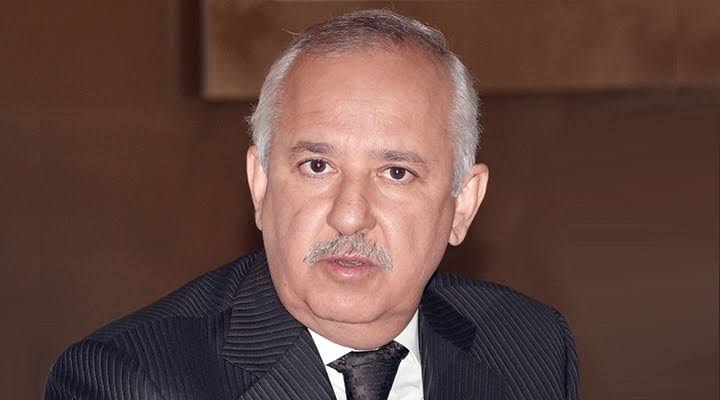
Anas Sefrioui seated in a Groupe Addoha boardroom

The 2018–2020 plan reoriented the group around cash generation and debt reduction before growth resumed.

By the middle of the 2010s the Moroccan social-housing cycle was maturing. The state programme that ran from 2010 to 2020 had contracted roughly 2.1 million units, but reported sales were far below that — and every developer geared to volume felt the difference between an order book and an offtake.

In 2018 Addoha launched “Priorité au Cash 2020”: an explicit reordering of priorities away from expansion and toward collections, asset disposals and debt reduction. The 2021 accounts show the strain of that transition — revenue of MAD 1.2 billion, a net loss of MAD 96 million, equity of MAD 9.6 billion against debt of MAD 4.7 billion, and a headcount of 481.

The most recently published results show the other side of it. For 2025, the group reported revenue of MAD 2.7 billion (up 4%) and net profit of MAD 516 million (up 70%), with consolidated equity of MAD 10.4 billion, net debt steady at MAD 4.385 billion and gearing near 30%. Secured revenue rose 22% to MAD 11.2 billion.

The shape of the business has changed with it. More than 26,000 units were in production at end-2025, about 30% of them in West Africa, across projects worth close to MAD 21 billion. In February 2026 the group committed more than MAD 3 billion to a premium mixed-use complex in Abidjan — four twenty-storey towers, offices and retail across more than 150,000 square metres. For a company built on capped-price housing, that is a deliberate change of register.
Standing

How he is recorded today

Net-worth estimates are exactly that — estimates, produced by third parties, that move with the share price. They are reproduced here with their source and date attached.

USD 1.5bn Estimated net worth Forbes real-time profile, ranking #2699 worldwide, as recorded on 8 September 2026
USD 1.3bn Forbes 2026 list World’s Billionaires 2026: #2,858 globally, #22 in Africa
No. 57 Real-estate leaders Forbes Middle East, Most Impactful Real Estate Leaders 2026

He remains chairman and chief executive of Groupe Addoha and its controlling shareholder, with a stake reported at approximately 64.8% — some 260.7 million shares. Forbes records that he has appeared on fourteen of its lists over the course of his career. His daughter, Kenza Sefrioui, is deputy chair of the group.

The two Forbes figures above differ because they are different instruments: one is a continuously updated valuation, the other a snapshot taken for the annual list. Reporting in 2025 noted his fortune falling by around USD 300 million after Addoha shares dropped more than 30% — a useful illustration of why a single net-worth number should never be treated as a fixed fact about a person.

Continue

Where to read next

The biography is the overview. These pages take each phase apart in detail.